'600 - '700 / List
Highlights
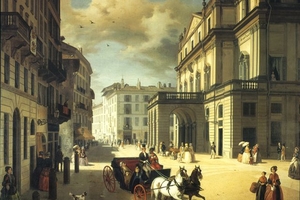
Interventi di manutenzione straordinaria, monitoraggio e manutenzione ordinaria di tutte le superfici di pregio
Read more »
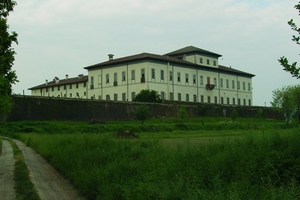
The palace is built on the ruins of the ancient castle which overlooked the feud of Turano in Lodi territory. The opulent dimensions and the magnificent paintings of the building are due to Calderari family, who received the feud from Visconti family and, since 1675, and transformed it into a symbol of prestige.
Read more »
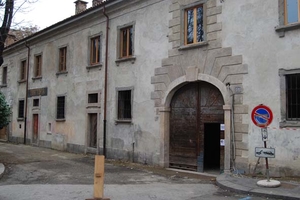
The restoration of Cascina Cuccagna architectural complex is an example of the transformation of the rural areas within the wider town growth.
It was essential therefore, since the beginning, to take into consideration all phases of this transformation.
Read more »
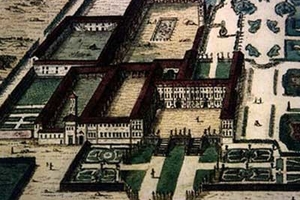
Villa Arconati, una delle “Ville di Delizia” che caratterizzavano il territorio milanese, dal 2009 oggetto di un progetto di rifunzionalizzazione.
Read more »
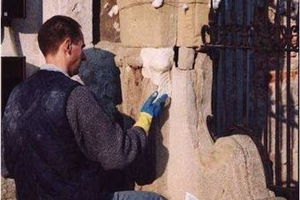
Restauro cancellata posta a chiusura della Corte dei Nobili
Read more »
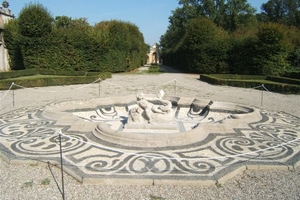
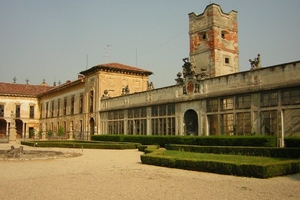
La limonaia costituisce elemento di cerniera tra la Villa e la serie di corpi di fabbrica strettamente legati alle funzioni del Giardino storico che si sviluppano lungo il lato est.
Read more »
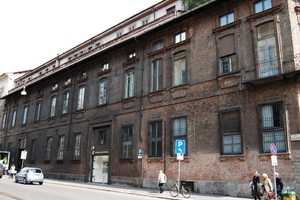
At the beginning of the Modern Era, the ancient medieval settlements which constituted the heart of the town, started to disappear to make space to new architectural styles which were going to draw the urban horizon. Serbelloni Palace, monumental neoclassic building, is one of the most important examples of the transition period represented by the 18th century, where the triumphal architecture became part of a very cosy but still rural urban fabric.
Read more »
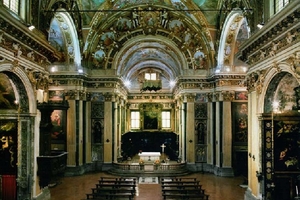
L’apparato decorativo della volta è costituito dal grande ciclo di affreschi con Storie della Croce realizzato dai fratelli...
Read more »
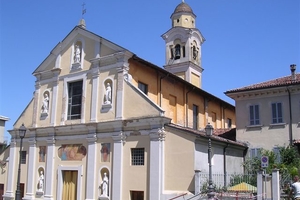
The aim of this urgent intervention on the façade was the reconstruction of a proper and efficient protective coat of the wall coverings. The first procedures affected the removal of heavily deteriorated elements and portions endangering the support structures that could not be restored, replacing them with new transpiring coats made of natural lime.
Read more »
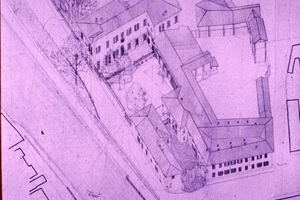
Villa eretta nel primo Seicento su terreni di proprietà della famiglia Crivelli. La costruzione fu realizzata in un punto strategico
Read more »
L'intervento ha riguardato la zona degli ambienti di servizio e dei rustici del complesso di Villa Sottocasa
Read more »

Before becoming property of Sanchioli Family, the building was first part of Rosca Family patrimony, and, later, of Aliprandi Family one.
Read more »
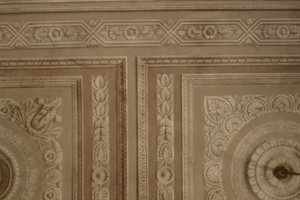
The vault of the “Manuscripts Hall” has suffered from major static problems for many lustrums: problems which were faced in accordance with the construction techniques available at the time.
Read more »
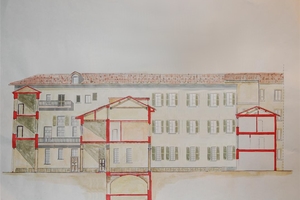
The architectural complex consists of a series of buildings arising around four internal courtyards.
The main buildings date back to the XVII century and are characterized by the masonry vertical load-bearings structures, the wooden floors, and the brick structure placed on a thin wooden framing.
Read more »
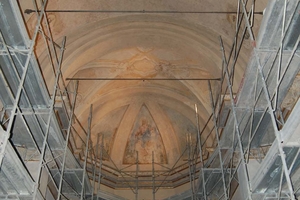
The preservation works took into consideration all the different historical stages that characterized the history of the church in order to preserve the most ancient parts hidden under the plaster after a very bad maintenance intervention carried out in the 60’s and 70’s.
Read more »
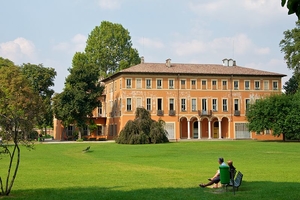
Villa Litta, fatta costruire da Pier Paolo Corbella (nominato nel 1686 marchese per il feudo di Affori) nei pressi dei ruderi
Read more »
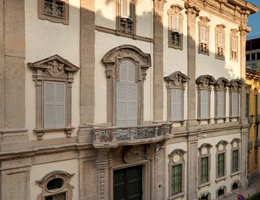
The state of degradation of the external façades of Cusani palace were due to the natural ageing of the materials affecting both plasters and stone shapes
Read more »
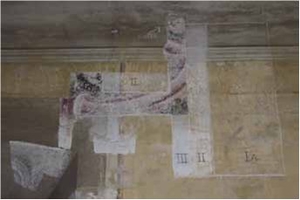
Works carried out in Villa Crosti-Colombo were strongly characterized by conservative restoration principles, in accordance with the complex history of the building and taking into consideration all evidences of the past free from personal or aesthetical censoring.
Read more »
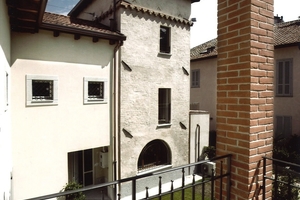
Villa Vigoni, con il suo giardino retrostante e un’antica torre, è sita tra le Vie Saccardo e De Canzi, cuore storico della zona di Lambrate.
Read more »
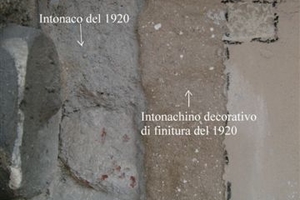
Designed by Tuscan architect Domenico Giunti, architect of the Spanish governor Don Ferrante I Gonzaga, the construction of the church started on February 21st, 1552, with the participation of the best artists of the time. Inspired by the Manneristic trend, the façade was completed only towards the end of the seventeenth century, according to Giunti’s original design.
Read more »
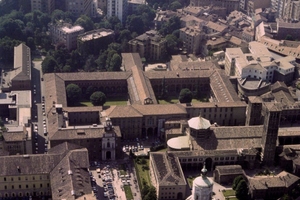
L’edificio seicentesco del Cortile d’Onore dell’Università Cattolica costituiva il completamento dei chiostri bramanteschi
Read more »
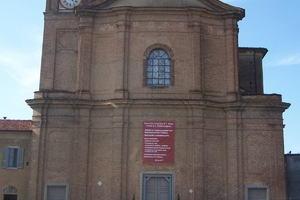
The historian Lorenzo Monti (in “Almanacco Codognese” 1919, page 40) testifies that the construction of the Parish Church of Santo Stefano Lodigiano started in 1756 - through the dedication of Cardinal Doria - after the cornerstone laying on September 19th. The church was consecrated in 1776 by the Bishop of Lodi, Monsignor Andreani.
Read more »

Meda family built the palace in the XVII century on the rural area between Piermarini gardens and via Cavalchino (Via Manin) that today is part of Milan Public Garden.
Read more »
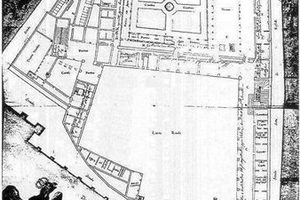
Complete renovation design: 1977
Museum: permanent collections, temporary exhibitions, documentation archives, museum services, executive offices.
Read more »
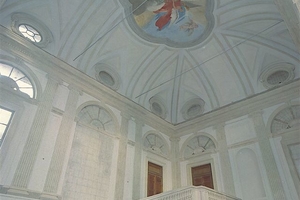
The massive damages suffered during II World War, entailing the loss of roof coverings, allowed run-off rain water degradation that during three years severely affected interior decorations and moulded parts.
Read more »
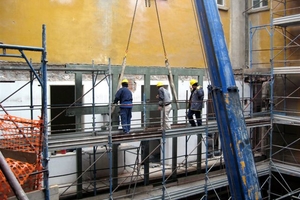
Palazzo Reale - besides being one of the most valuable buildings of the town - has always been considered as the major exhibition venue by both citizens and tourists willing to attend important international exhibits.
Read more »
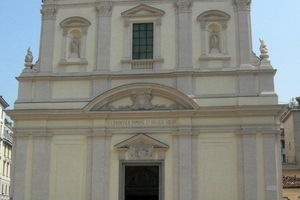
Portions of roofings and of rainwater drainage system, as well as window gaskets, were reconstructed in order to avoid seepages. Works also interested humidity control in the lower parts of the walls and on frescoed surfaces where particularly damaged parts were reinforced.
Read more »
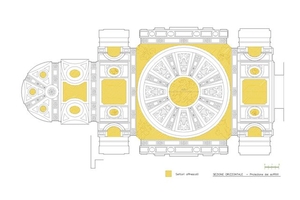
These renovation works represented an important challenge due to the presence of a protective shiny coating covering the painted figures which reflected the light preventing a proper view from the ground.
Read more »
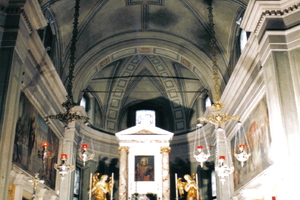
The numerous historic vicissitudes of the Shrine brought to inadequate interventions on the XVI century decorations, which, in turn, made the restoration and preservation works a lot more complicated. During a cholera outbreak, it was completely covered with a lime coat and later rebuilt in 1874.
Read more »
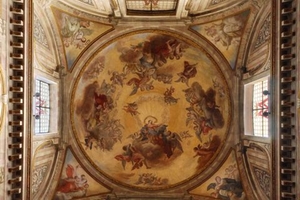
Before undergoing restoration, the decorations of the Blessed Shrine located above the Lower Shrine of Corbetta, were totally darkened by a brown coating which had nothing to do with the original materials.
Read more »
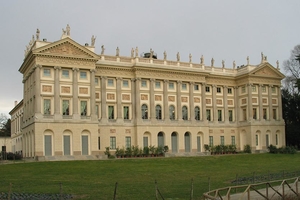
Restoration of façades, of sculptures, and of high relieves and entrance halls started in 2002. As usual, the works started with a series of stratigraphic evaluations and laboratory analysis such as microstratigraphies, and mineral-petrographies.
Read more »

The jobsite started on November 25th, 2002. As usual, the works started with a series of stratigraphic evaluations and laboratory analysis such as microstratigraphies, and mineral-petrographies. Plaster recovery and consolidation follow, while severely damaged mortars are removed.
Read more »
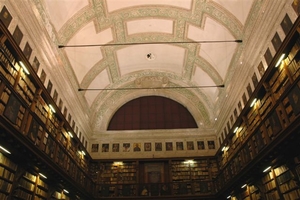
La Sala Federiciana, originaria monumentale sala di lettura della Veneranda Biblioteca Ambrosiana, realizzata all’inizio del Seicento, deve il suo attuale aspetto agli interventi di restauro e ricostruzione attuati nel dopoguerra.
Read more »
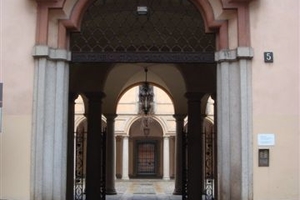
Clerici Palace is located at number 5 of the street carrying the same name, among the XVII century buildings of Contrada del Prestino dei Bossi (Quarter of Bossi Bakery). The building itself is a typical example of late baroque architecture and still one of the most rich and splendid dwellings of the XVIII century, despite the various losses and tamperings suffered during the XIX and XX century.
Read more »

Restoration works between 2005-2007 aimed to preserve all decorations and decorated surfaces inside Villa Reale, damaged by seepages, inadequate previous interventions and several changes in the end use of some areas.
Read more »
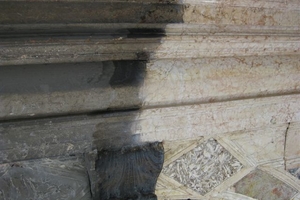
The monumental entrance portal of Barni Palace consists of a couple of ionic marble columns over moulded plinths with rear pilasters from which a rounded arch spreads out. Over the capitals two shelves decorated with leaves of acanthus, support the balcony at the first floor.
Read more »
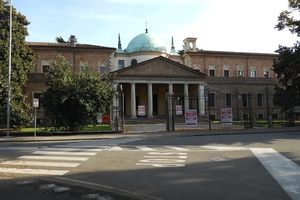
The former Soave Hospital, neo-classic building whose construction started in 1778 and listed building owned by the Municipality of Codogno (Lodi), underwent several restoration actions and changes in the last 20 years that led to its designation as a multifunctional Cultural and Exhibition Centre - acquiring the role of cultural heart of the Lower Lodi district.
Read more »
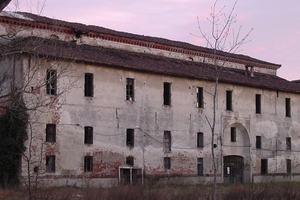
Works were designed and supervised by Architects Davide Cerali, Giacinta Jean and Floriana Petracco from 2001 to 2004.
Read more »
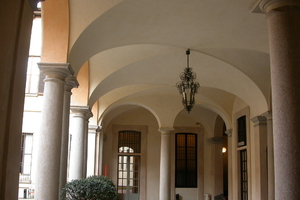
The first restoration interventions were carried out in 2004 in the President’s (or Ganimede’s) Room, characterized by the splendour of its interiors, aiming at recuperating the frescoes andgolden stuccoes of the Cremonese painter A. Borroni (1684-1772) – from Castellino’s school – as well as the doors and the wooden shutters of the same period with gold inlays.
Read more »

The first restoration interventions were carried out in 2004 in the President’s (or Ganimede’s) Room, characterized by the splendour of its interiors, aiming at recuperating the frescoes andgolden stuccoes of the Cremonese painter A. Borroni (1684-1772) – from Castellino’s school – as well as the doors and the wooden shutters of the same period with gold inlays.
Read more »
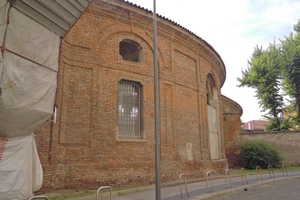
The XVIII century architectural complex known as Rotonda della Besana underwent restoration and renovation interventions with respect to the loggia and the coverings.
Read more »
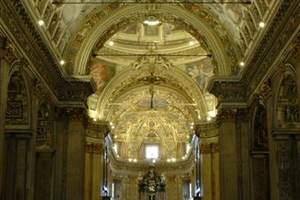
Interventions interested the presbitery and central nave of the cathedral of St. Vittore al Corpo: the preservation of decoratons and of some paintings that were part of the decorative setup.
Read more »

La facciata principale della chiesa è stata oggetto di un cantiere unitario che costituisce il primo di alcuni lotti necessari per poter effettuare azioni di conservazione e di valorizzazione del complesso di S. Alessandro, sia per quanto attiene alle superfici esterne che interne
Read more »
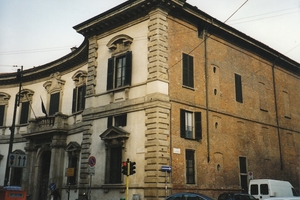
The construction of The Senate Palace began in 1608 during the Counter-Reformation era: it was erected as “Swiss College”, i.e. a Swiss seminary college for the education of Swiss priesthood.
Read more »
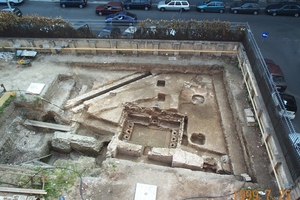
Le caratteristiche del terreno e del fabbricato hanno consentito di progettare l'ampliamento dei depositi mediante la costruzione della prima delle tre strutture interrate progettate
Read more »
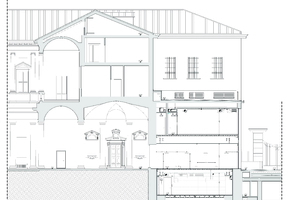
The executive project aimed at renovating the three levels of the wing on via Boschetti (underground, I and II floor) to host a permanent warehouse, a storage place for dirty and clean materials, a restoration lab, a copy center, a room for the air treatment unit, and a storage for compressed nitrogen cylinders.
Read more »
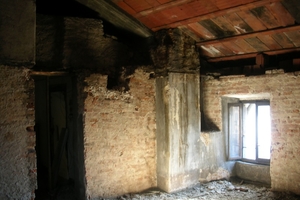
Il progetto s’inserisce all’interno del più generale programma di recupero funzionale ed adeguamento normativo ed impiantistico della sede dell’Archivio di Stato di Milano, che fa direttamente riferimento al progetto definitivo approvato in data 6 dicembre 2004 dalla Direzione Generale per gli Archivi.
Read more »
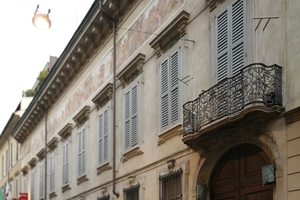
Palazzo Morando Attendolo Bolognini è un edificio del XVIII secolo che è stato donato alla città di Milano nel 1945dalla famiglia Attendolo Bolognini. Oggi è sede del Museo di Storia Contemporanea oltre che utilizzato per mostre temporanee.
Read more »
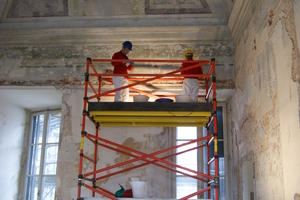
In March 2008, inside some of the rooms of the former offices of the Archives Commission of Lombardy, in Palazzo del Senato and State Archives of Milan in Via Senato 5 - now School of Archival and Paleographic Studies – massive stratigraphic evaluations were carried out in parallel with the reuse and upgrading project of the former Commission.
Read more »
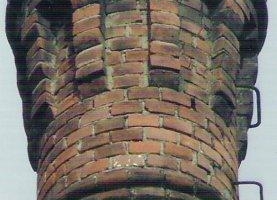
The furnace of Corno Giovine, also called Fornace Rubini, named after the owner’s name who bought it in 1974, is located in the municipality countryside.
It’s an Hoffman kiln - elongated plan with semicircles at the two ends, covered by a wide roof with a kiln in the middle where a fire burns continuously.
Read more »
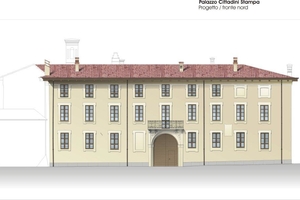
Stampa Palace dates back to the first half of the 17th century and consisting of a main building with wide rectangular ground plan hosting remarkable paintings, and of a second one with an irregular plan overlooking the courtyard.
Read more »
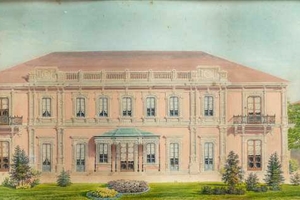
L’immobile oggetto del presente progetto è di origine seicentesca, con ampliamenti e trasformazioni nei secoli successivi, fino all’attuale assetto di definizione ottocentesca. Le superfici hanno risentito nel tempo di numerosi interventi di manutenzione che hanno modificato materiali di finiture e cromie.
Read more »
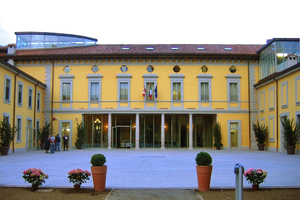
The use of Villa di Breme Gualdoni Forno as a higher education centre of the University of Milan-Bicocca, allowed to protect the original plant of the villa, through an almost natural adjustment procedure of the new spaces to the existing ones.
Read more »
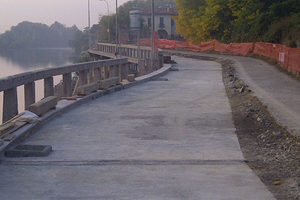
Interventions included the following works:
- Construction of an entry path
- Cleaning and elimination of bushes on the walls (river Adda side)
- Stabilization of pillars
- Restoration of beams and of existing road base
- Restoration of the historic walls (river Adda side)
- Placement of steel shelves for base strengthening
- Diagnostic tests
- Construction of poles and tie-rods
- Shot concrete
- Demolition and removal of roadbed
- Hydro demolition of the reinforced concrete curb and suction of the demolished materials
- Construction of new reinforced concrete curbs
- Construction of a new road base
- Structural steel reinforcement
- Renovation of granite parapets
- Completion of the road by means of binder, wearing course, rainwater drainage system and new guardrail and road signs.
Read more »
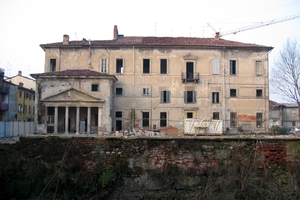
Palazzo Pirola-Freganeschi è collocato dirimpetto a palazzo Sola-Busca sulla sponda opposta del Naviglio Martesana. L’edificio, come apprendiamo dalla relazione storica allegata al decreto di vincolo del Ministero dei beni culturali del 31 maggio 2001 costituisce una delle residenze signorili settecentesche più significative del Comune di Gorgonzola”. Nel marzo del 2005 per poter redarre un dettagliato progetto di restauro delle superfici si è effettuata una vasta campagna d’indagini stratigrafiche. I numerosi saggi effettuati all’interno dei locali dell’immobile hanno evidenziato che siamo in presenza di un edificio storico assai interessante che ha subito nei secoli numerose modifiche. L’indagine storico-materica ha permesso d’identificare il perimetro delle stanze del palazzo prima dell’innalzamento di tavolati negli ultimi 50 anni.
Read more »
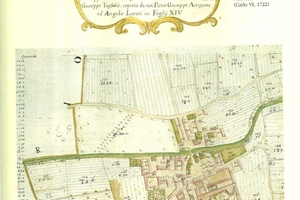
Built as a private dwelling on the border of the ancient medieval village of Cesano Maderno, south of Milan, the building is today part of a suburban landscape grown during the Industrial Era. When, in 1987, the building became a municipality property, it was in a state of abandon and decay.
Read more »
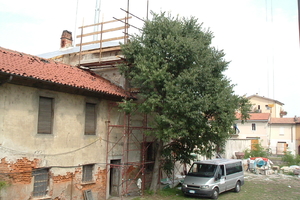
The construction of the building dates back to the 16th Century and it was originally the Camparo’s (guardian) home (i.e. the guardian of Naviglio, Milan canal).
It hosted also state offices, where officials such as the Waters Commissioner or the Waters Chief Constable managed their activities of inspection and command of the canal.
Read more »
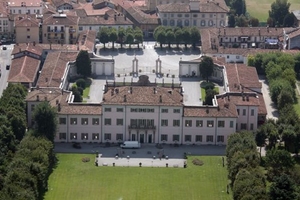
L’intervento ha previsto un parziale consolidamento e risanamento dell’organismo architettonico e degli spazi interni al fine di poter salvaguardare la salubrità delle sue sale rendendole nuovamente usufruibili e in grado di restituire alla vita sociale ed urbana il monumento in tutta la sua vitalità e nei suoi originali spazi...
Read more »
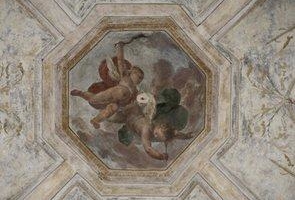
Molti ambienti del palazzo presentano in volta e sulle pareti affreschi e dipinti a calce e ad affresco. Lo stato delle opere è di degrado avanzato. Alcuni ambienti nascondono sotto la tinteggiatura a tempera soffitti lignei a cassettoni decorati. Dal confronto con il soffitto ligneo della scala Y, si può avanzare l’ipotesi che siano del XVII secolo.
Read more »
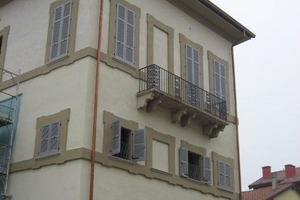
Il progetto di restauro e risanamento conservativo di Palazzo Pirola, edificio vincolato ex art. 10-13 D.Lgs. 42/2004 (DM 31/5/2001), ha avuto come principio ispiratore il mantenimento del manufatto esistente e la salvaguardia delle sale affrescate secentesche e ottocentesche, oltre che la volontà di riportare gli ambienti storici alla loro unitarietà originaria, perduta a seguito delle numerose manomissioni avvenute nel corso degli anni ed in particolar modo nel 900.
Read more »
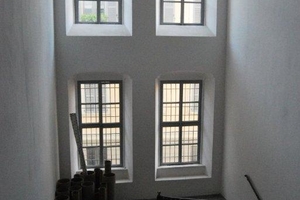
The Laudense Library is located in the historical centre of Lodi and it safeguards the charming Library of the confraternity of the Filippini.
The aim of the renovation was to increase the value of the place, making it welcoming and functional, and blending the aesthetic characteristics with the materials used, thus transforming the library spaces into a fascinating spot.
Read more »
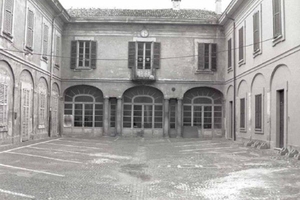
The Palace located at Cassano d’Adda underwent restoration and rearrangement interventions - both from a functional and layout point of view – to become the new town hall.
Read more »
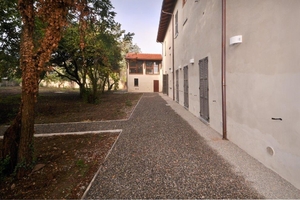
The renovation works of Mora palace aimed at turning it into the new town hall.
The building is located in the historic centre of Pantigliate and is prior to 1720, probably dating back to 15th century in its original layout.
Read more »
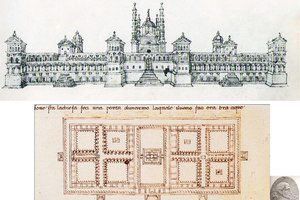
Thanks to the pilot job site opened in 2009, the knowledge of materials, of the decay conditions and of the status of previous interventions was deepened thus directing the restoration operations.
The preliminary tests determined all technologies, procedures, equipments, products and materials suitable to face the required interventions in compliance with the historical identity of the buildings.
Read more »
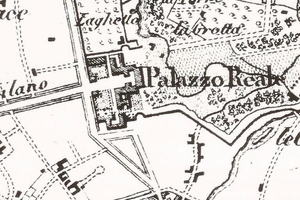
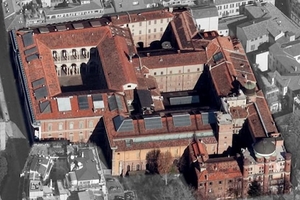
The soil and building characteristics allowed the design of the enlargement of the warehouses thanks to the construction of the first of three planned structures.
This first structure (consisting of two underground levels) is located under the garden facing Via Boschetti, and it hosts the generating and power stations supplying the whole building plus a first enlargement of the storages.
Read more »